
Water Treatment Plant Manufacturing is Complex
The Water Treatment Plant (WTP) industry is rapidly evolving as businesses and governments invest in sustainable water management solutions. From industrial RO plants and sewage treatment plants (STPs) to effluent treatment plants (ETPs) and customized filtration systems, every project involves complex engineering, procurement, manufacturing, and installation activities.
Unlike mass-production industries, Water Treatment Plant manufacturing is highly project-driven. Each customer has unique technical requirements, customized designs, different capacities, and specific delivery schedules. Managing these projects through spreadsheets or disconnected software often leads to delays, material shortages, cost overruns, and communication gaps between departments.
This is where Water Treatment Plant ERP Software becomes essential. A specialized ERP solution integrates Sales, Engineering, Production Planning, Inventory, Procurement, and Manufacturing into a single platform, enabling complete control over every stage of the project lifecycle.
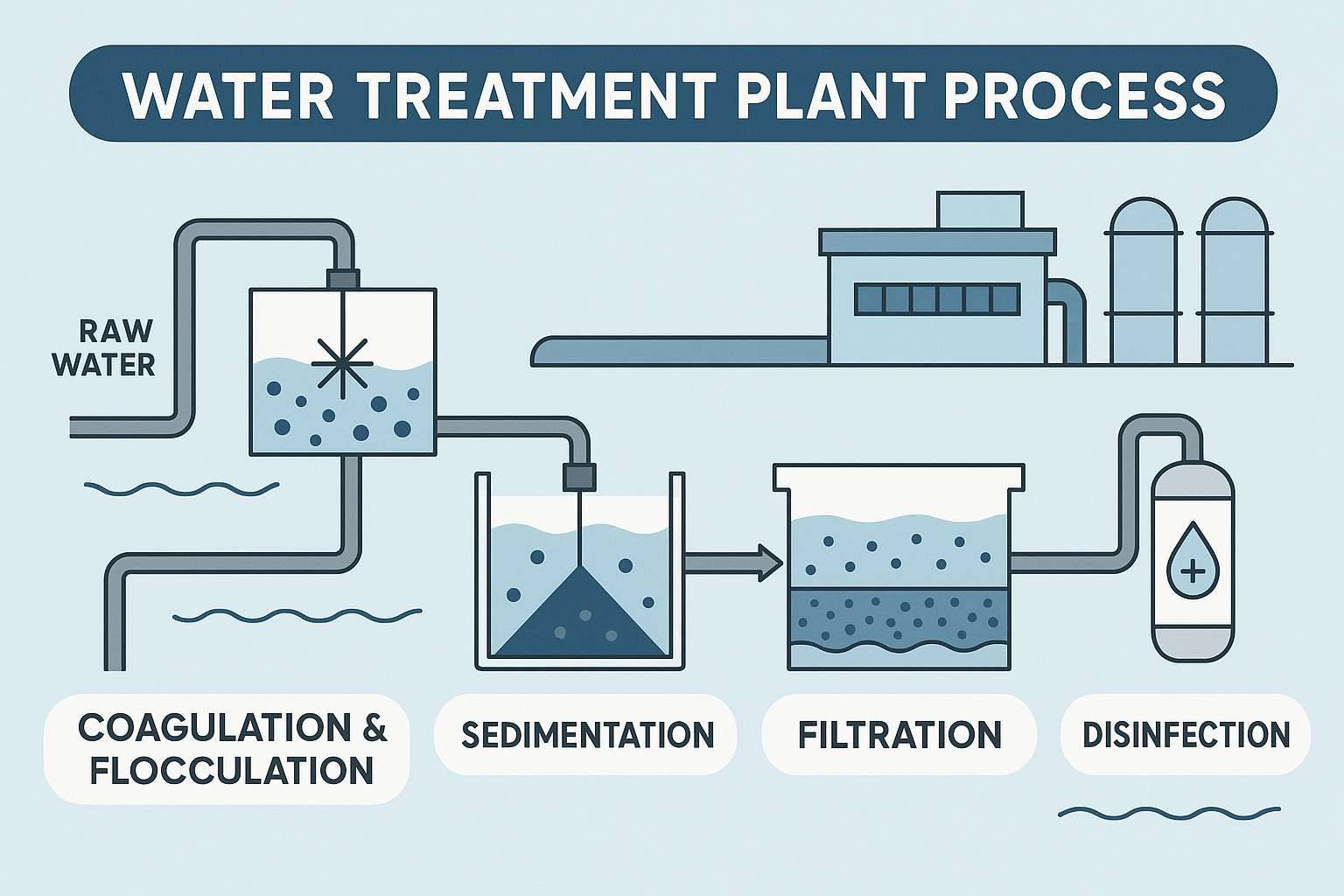
Challenges Faced by Water Treatment Plant Manufacturers
Water Treatment Plant manufacturers deal with several operational challenges that directly impact project delivery and profitability.
1. Project-Based Manufacturing
Every Water Treatment Plant is different. Customers often require customized capacities, layouts, component configurations, and treatment processes. Managing multiple projects simultaneously without a centralized system becomes increasingly difficult.
2. Complex Engineering Processes
Engineering teams create mechanical drawings, electrical layouts, piping diagrams, and equipment specifications for each project. Without proper document management, version control becomes a major challenge.
3. Multi-Level Bill of Materials (BOM)
A single Water Treatment Plant may consist of hundreds or even thousands of components organized into multiple assemblies and sub-assemblies. Maintaining these BOM structures manually is time-consuming and error-prone.
4. Material Planning Challenges
Production delays often occur because materials are unavailable when required. Without accurate Material Requirement Planning (MRP), manufacturers either overstock inventory or face costly shortages.
5. Procurement Coordination
Purchasing teams must procure materials from multiple vendors while ensuring timely delivery and quality compliance. Manual procurement processes increase lead times and reduce visibility.
6. Job Work Management
Many fabrication processes such as laser cutting, machining, powder coating, galvanizing, and fabrication are outsourced. Tracking materials sent to vendors and monitoring job work status manually can lead to delays and inventory discrepancies.
Why Generic ERP Software Fails for Water Treatment Plant Manufacturing
Many businesses implement generic ERP software expecting it to handle complex manufacturing operations. However, standard ERP solutions are typically designed for trading or simple manufacturing environments and often lack the capabilities required for project-based industries.
Generic ERP systems commonly fall short because they:
- Cannot manage project-wise manufacturing effectively.
- Lack support for multi-level Bill of Materials.
- Do not provide engineering drawing management.
- Offer limited Material Requirement Planning capabilities.
- Cannot automatically generate project-specific work orders.
- Have inadequate job work and subcontracting management.
- Provide limited production planning and routing functionality.
- Struggle with project-based material tracking and costing.
As a result, manufacturers continue using spreadsheets alongside the ERP, creating duplicate work, increasing errors, and reducing operational efficiency.
A specialized Manufacturing ERP Software designed for Water Treatment Plant manufacturers addresses these challenges by supporting the complete project lifecycle.
Complete Manufacturing Workflow in Water Treatment Plant ERP
A purpose-built ERP solution integrates every department into a seamless workflow, ensuring that information flows automatically from one stage to the next.
The typical manufacturing workflow includes:
- Customer Enquiry and Quotation
- Sales Order Confirmation
- Automatic Project Code Generation
- Engineering Design and Drawing Management
- Multi-Level Bill of Materials (BOM) Creation
- Process List and Route Card Definition
- Production Planning
- Material Requirement Planning (MRP)
- Purchase Indent Generation
- Procurement and Inventory Management
- Job Work Assignment for Outsourced Processes
- Production Execution
- Final Assembly and Dispatch
Because each process is connected, users gain complete visibility into project progress, material availability, and production status.
Key Features of Water Treatment Plant ERP Software
Sales Order Management
Capture customer orders with complete project specifications, delivery schedules, commercial terms, and technical requirements.
Benefits
- Faster order processing
- Centralized customer records
- Approval workflows
- Complete order history
Automatic Project Code Generation
Each project or deliverable receives a unique Project Code, ensuring every engineering document, BOM, purchase request, and production activity remains linked throughout the manufacturing process.
Engineering Document Management
Store and manage:
- Mechanical Drawings
- Electrical Drawings
- Fabrication Drawings
- Piping Layouts
- Technical Documents
- Revision History
This ensures that production teams always work with the latest approved drawings.
Multi-Level Bill of Materials (BOM)
Create structured BOMs consisting of:
- Finished Product
- Sub-Assemblies
- Components
- Raw Materials
Each component can include engineering drawings, specifications, quantities, and procurement information.
Production Planning
Generate Work Orders directly from approved Sales Orders and schedule production based on delivery commitments, machine availability, and manpower.
Material Requirement Planning (MRP)
The ERP automatically calculates material requirements by considering:
- Existing Inventory
- Reserved Stock
- Open Purchase Orders
- Production Requirements
- Safety Stock Levels
This ensures materials are available when required while minimizing excess inventory.
Procurement Management
Automatically generate Purchase Indents for materials identified during the MRP process and streamline vendor coordination for timely procurement.
Job Work Management
Manage outsourced manufacturing operations such as:
- Laser Cutting
- CNC Machining
- Fabrication
- Powder Coating
- Surface Treatment
- Galvanizing
Track materials sent to vendors, monitor job status, and record material returns within the ERP.
Inventory Management
Monitor raw materials, work-in-progress (WIP), finished goods, and project-specific inventory in real time, improving stock accuracy and reducing wastage.
Benefits of Implementing Water Treatment Plant ERP Software
A specialized ERP solution provides measurable operational and business benefits.
Improved Project Visibility
Monitor every project from Sales Order to production completion using real-time dashboards.
Faster Production Planning
Automatically generate Work Orders and production schedules, reducing manual effort and planning delays.
Better Material Utilization
MRP helps optimize inventory levels, preventing both shortages and overstocking.
Improved Engineering Coordination
Engineering documents, BOMs, and revisions remain centrally managed, reducing manufacturing errors.
Reduced Procurement Delays
Automated Purchase Indents and integrated procurement workflows help ensure materials arrive on time.
Efficient Job Work Tracking
Monitor outsourced manufacturing processes with complete traceability and vendor performance visibility.
Higher Customer Satisfaction
On-time deliveries, accurate project tracking, and improved manufacturing efficiency lead to better customer experiences.
Why Choose i-MANTRA ERP for Water Treatment Plant Manufacturing?
i-MANTRA ERP by Inode Technologies is designed specifically for project-based manufacturing industries where every order requires detailed engineering, planning, procurement, and production coordination.
Our solution enables manufacturers to:
- Digitize the complete manufacturing process.
- Automate project-wise production planning.
- Manage multi-level BOM structures.
- Integrate engineering and manufacturing teams.
- Optimize material planning using intelligent MRP.
- Track outsourced job work efficiently.
- Improve inventory accuracy and procurement planning.
- Monitor project progress through real-time dashboards.
Whether you manufacture Industrial RO Plants, Effluent Treatment Plants (ETP), Sewage Treatment Plants (STP), Demineralization Plants (DM), or customized Water Treatment Systems, i-MANTRA ERP provides the flexibility and control needed to improve productivity and reduce operational costs.
Conclusion
The increasing complexity of Water Treatment Plant manufacturing demands more than traditional software solutions. Manufacturers need a specialized ERP system capable of managing customized projects, engineering documentation, production planning, procurement, inventory, and subcontracted operations from a single platform.
Water Treatment Plant ERP Software empowers organizations with complete visibility, streamlined workflows, improved resource utilization, and better project execution.
If your organization is looking to modernize its manufacturing operations and deliver projects more efficiently, i-MANTRA ERP offers a comprehensive solution tailored specifically for Water Treatment Plant manufacturers.
By connecting Sales, Engineering, Procurement, Production, and Inventory into one integrated system, businesses can improve operational efficiency, reduce costs, and consistently deliver high-quality projects on time.
 WhatsApp us